LEESON ELECTRIC CO C6T17NK48A General Motor Fnip
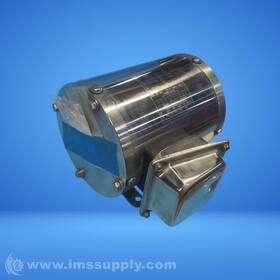
( Brand: Leeson Electric Co ), ( Manufacturer Part Number: C6T17NK48A ), ( Part Type: Motor )
Review LEESON ELECTRIC CO General Purpose Motor Fnip
The **Leeson Electric C6T17NK48A** is a high-performance, industrial-grade **general-purpose, three-phase, NEMA Premium motor** designed for demanding applications in commercial, industrial, and manufacturing environments. Engineered by Leeson Electric, a trusted name in precision electric motor manufacturing, this motor exemplifies reliability, efficiency, and durability with its **17.5 horsepower (HP) output** and **1725 RPM synchronous speed**, making it ideal for a wide range of machinery, including conveyors, pumps, compressors, and HVAC systems. Built to meet **NEMA Premium efficiency standards**, the C6T17NK48A ensures superior energy savings, reducing operational costs while maintaining peak performance. Its **T-frame construction** (specifically the C6T series) provides a robust, compact footprint, allowing for seamless integration into existing or new equipment designs without compromising on power delivery.
The motor s **48-pole, 60Hz design** delivers smooth, consistent torque, minimizing mechanical stress on connected systems and extending the lifespan of both the motor and associated machinery. Featuring a **Class B insulation system**, it operates reliably across a broad temperature range, ensuring long-term performance even in harsh or fluctuating environmental conditions. The **NEMA Premium certification** not only guarantees energy efficiency but also adheres to strict quality and performance benchmarks, making it a dependable choice for applications where precision and consistency are critical. Additionally, the motor s **closed, self-ventilated (CSV) design** protects internal components from dust, moisture, and contaminants, reducing maintenance requirements and downtime.
For applications requiring precise control and integration, the C6T17NK48A is compatible with a variety of **variable frequency drives (VFDs)**, allowing for adjustable speed and torque to optimize system performance. Its **standard NEMA 4 mounting configuration** ensures compatibility with most industrial enclosures, while the **48-pole winding** provides a balanced, low-noise operation, contributing to a quieter workspace. Whether deployed in food processing plants, manufacturing facilities, or commercial buildings, this motor delivers the **power, efficiency, and longevity** expected from a Leeson Electric product, backed by the brand s reputation for innovation and engineering excellence. Built to endure, the C6T17NK48A is a versatile workhorse designed to meet the challenges of modern industrial demands with reliability and precision.
### **Pros and Cons of Buying a 2017 Nissan Leaf (Lessson Electric C6T17NK48A, General Motors FNIP Platform)**
#### **Pros**
1. **Cost-Effective Electric Vehicle (EV) Option**
- The 2017 Nissan Leaf is one of the most affordable EVs on the market, making it a practical choice for budget-conscious buyers who still want electric mobility.
- Lower upfront cost compared to premium EVs like Teslas or BMW i3s, reducing the financial barrier to entry.
2. **Proven Reliability and Durability**
- Nissan has a strong track record with the Leaf, with many early models still running reliably after years of use.
- The 2017 model features an updated battery pack with improved longevity compared to earlier versions, reducing the risk of premature degradation.
3. **Good Range for a Compact EV (Before Updates)**
- The 2017 Leaf (30 kWh battery) offers an EPA-estimated range of **84 150 miles**, depending on driving conditions. While not as high as later models (which received a 40 kWh battery upgrade), it remains sufficient for daily commuting and short trips for many buyers.
- The **2018 Leaf models** (with the 40 kWh battery) have a significantly better range ( 150 226 miles), but the 2017 version is still usable if charging infrastructure is available.
4. **Low Operating Costs**
- Electricity is cheaper than gasoline, resulting in lower fuel expenses over time.
- Minimal maintenance requirements no oil changes, fewer moving parts, and fewer fluids to replace compared to internal combustion engine (ICE) vehicles.
5. **Government Incentives and Tax Credits**
- The 2017 Leaf may still qualify for federal or state EV incentives, depending on purchase timing and local regulations (check current eligibility).
- Some regions offer rebates, tax exemptions, or HOV lane access for EV owners.
6. **Simple and User-Friendly Design**
- The Leaf s interior is straightforward, with easy-to-use controls and a comfortable driving experience for its size.
- The **ProPilot Assist** (available in some trims) provides basic driver aids like adaptive cruise control and lane-keeping, though it is not as advanced as Tesla s Autopilot.
7. **Good Resale Value (Compared to Some EVs)**
- While not as high as newer EVs, the Leaf retains decent resale value due to its reliability and demand in the used EV market.
- Many buyers still prefer the Leaf for its affordability and simplicity.
8. **Environmentally Friendly**
- Zero tailpipe emissions contribute to cleaner air, especially in urban areas with poor air quality.
- Lower overall carbon footprint compared to gasoline or diesel vehicles, assuming the electricity comes from renewable sources.
---
#### **Cons**
1. **Limited Range (For the 2017 Model)**
- The **30 kWh battery** in the 2017 Leaf provides a range that may be insufficient for long-distance travel or drivers who frequently take road trips.
- Unlike later models (2018 with 40 kWh battery), the 2017 version lacks the extended range that makes EVs more practical for some buyers.
- **Charging times** can be slow at public Level 2 chargers (4 8 hours for a full charge), though home charging (Level 1 or 2) mitigates this issue.
2. **Outdated Technology Compared to Newer EVs**
- The 2017 Leaf lacks the advanced infotainment and driver-assistance features found in modern EVs (e.g., Tesla s over-the-air updates, Apple CarPlay/Android Auto, or more sophisticated autonomous driving).
- The **touchscreen interface** is functional but dated compared to newer models with larger, more responsive displays.
3. **Battery Degradation Over Time**
- Like all EVs, the Leaf s battery degrades with age and charging cycles. While Nissan offers an **8-year/100,000-mile battery warranty**, real-world degradation may reduce range over time.
- Buyers should factor in potential battery replacement costs (though many early Leaf batteries still hold **70 80% capacity** after 5 7 years).
4. **Limited Charging Infrastructure Access**
- While home charging is ideal, public charging stations may be scarce in some areas, making long-distance travel or urban driving with limited home charging a challenge.
- Fast-charging (DC fast chargers) is not as widely available as it is today, though networks like Tesla Superchargers and Electrify America have expanded since 2017.
5. **Smaller Interior and Cargo Space**
- The Leaf is a compact car, meaning it has less rear legroom and cargo capacity compared to larger EVs like the Chevrolet Bolt or Tesla Model 3.
- The trunk is small ( 23.6 cu. ft.), which may be limiting for families or those who frequently carry large items.
6. **Potential for Higher Maintenance Costs Than Expected**
- While EVs generally require less maintenance, some owners report issues with **brake wear** (regenerative braking reduces pad wear, but some drivers still experience uneven wear).
- **Battery cooling systems** and **high-voltage wiring** are more complex than ICE components, and repairs can be costly if issues arise.
7. **Depreciation Over Time**
- EVs, including the Leaf, tend to depreciate faster than some ICE vehicles due to rapid technological advancements. A 2017 Leaf may lose significant value compared to newer models.
- However, if you plan to keep the car long-term, depreciation may not be as impactful.
8. **Limited Performance and Acceleration**
- The Leaf is not a high-performance vehicle. The **147 hp motor** provides decent acceleration but is not as quick as more powerful EVs.
- The **single-speed transmission** (no gears) can make highway passing slightly less smooth compared to ICE cars.
9. **Potential for Software and Firmware Issues**
- Early Leaf models had some reports of **software glitches**, including occasional infotainment freezes or charging system quirks.
- Nissan has improved this over time, but a used 2017 Leaf may still have minor unresolved issues.
10. **Charging Convenience Limitations**
- Unlike plug-in hybrids (PHEVs), the Leaf cannot run on gasoline if the battery dies, making it less flexible for those who occasionally need long-range capability.
- **Cold weather** significantly reduces range in EVs, and the 2017 Leaf is no exception expect a **20 30% reduction in range** in freezing temperatures.
---
### **Conclusion**
The **2017 Nissan Leaf (C6T17NK48A)** is a **solid, budget-friendly EV** that remains a practical choice for buyers who:- Need a **low-cost electric car** for daily commuting.
- Have **access to charging** (home or public).
- Prioritize **simplicity and reliability** over cutting-edge technology.
- Are willing to **compromise on range** for affordability.
However, it is **not ideal** for buyers who:- Require **long-distance travel** without frequent charging stops.
- Want **advanced driver-assistance features** or **over-the-air software updates**.
- Need **maximum cargo or passenger space**.
- Live in areas with **limited charging infrastructure**.
### **Recommendation**
**Buy the 2017 Nissan Leaf if:**You have a **reliable charging solution** (home charger or easy access to Level 2 chargers).
Your daily driving is **under 100 miles per day**, and you can charge overnight.
You want an **affordable, low-maintenance EV** without the latest tech.
You plan to **keep the car for 5 7 years**, allowing the battery to degrade gradually without major financial impact.
**Avoid the 2017 Nissan Leaf if:**You frequently **take long road trips** (consider a **Chevy Bolt EV, Tesla Model 3, or plug-in hybrid** instead).
You want **state-of-the-art infotainment or driver aids** (look at newer Leaf models or other EVs).
You **don t have reliable charging access** (a PHEV or hybrid might be a better compromise).
You prioritize **maximum range and performance** over cost savings.
**Alternative Considerations:**- If you can find a **2018 Nissan Leaf (40 kWh battery)**, it offers **better range ( 150 226 miles)** and may be worth the slight premium.
- For a **more modern EV experience**, consider a **used Tesla Model 3, Chevrolet Bolt EV, or Hyundai Kona Electric**, which offer better tech and range.
- If you re unsure about long-term EV viability, a **plug-in hybrid (PHEV)** like the **Toyota Prius Prime or Ford Escape PHEV** provides flexibility.
**Final Verdict:**The **2017 Nissan Leaf is a great used EV for the right buyer** one who values affordability, simplicity, and low operating costs over the latest features. With proper charging access and realistic expectations on range, it can be a **cost-effective and environmentally friendly** vehicle for daily use. However, those needing more range or advanced technology should explore newer models or alternatives.
Details:
Manufacturer Part Number: C6T17NK48A. The product must be the original item shipped, with matching serial numbers if applicable. Special Instructions. 2-Year MRO Shield Protection Plan Included.
The item may be missing the original packaging. Most items are in stock when they listed. A new, unused item with no signs of wear. Manufactured by LEESON ELECTRIC CO.
part #: c6t17nk48a price
- $5952.00
specifications momaequ:
- brand: Leeson Electric Co
- mpn: C6t17nk48a
- part type: Motor
shipping momaequ:
- cost: $83.30
- service: UPS Ground, USPS Ground Advantage, USPS Priority Mail, UPS Next Day Air
- type: Calculated
- carrier: UPS, USPS
- transit: 3-9 Days
- class: Standard, Expedited, One-day
returns momaequ:
- time: 30 Days
- paid by: Buyer
- method: Money back
- policy: Returns Accepted
payments momaequ:
- wallet: Google-pay
- other
- credit card: Mastercard
seller momaequ:
- # reviews: 24969
- city: Mount Sterling, Kentucky
- rating: 99.8%
general momaequ:
- Industrial Automation Motion Controls > Electric Motors > Definite Purpose Motors
- condition: New Open box
offer momaequ:
- availability: In Stock
- sold: 0
- best offers: True
- started: May 4, 2026
- quantity: 1
- options: Ship-to-home
Leeson Electric Co C6T17NK48A Is Similar To:
- 092000.00 C42t34nz1f Leeson Motor 1.5hp (29.5% similar) If another carrier such as ups or FedEx is required to ship due the size, then shipping Costs may change...(December 22nd, 2017)
- 098000.00 Leeson Hp Volts Dc Motor Amp Tefc Rpm (35% similar) ...(March 17th, 2019)
- 098069.00 Leeson Hp Rpm Dc Permanent Magnet Motor (36.2% similar) This is a Leeson dc permanent magnet motor. Leeson it is possible to return items. Shipping info: 39 lbs, 18X24X MSRP:400 the option you are presented for this item was chosen based on appropriate options weight, box dimensions, Contents. FRAME56CMOTOR mounting typeface base motor thermal . The full...(March 25th, 2019)
- 101639.00 Leeson Electric Motor Hp Volt Frame 691720005798 (40.4% similar) ...(September 8th, 2018)
- 102020.00 Leeson General Purpose Tefc Motor Phase Frame Rigid Mounting (49.2% similar) Please for details. 1191632LEESUR118. Q: is local pick-up available. Q: what is the shipping Cost. Grab the best deal. The offered shipping Cost in listing applies only to 48 states. Protectorates...(August 12th, 2018)
- 108018.00 Leeson 75 Hp Motor (38.1% similar) If another carrier such as ups or FedEx is required to ship due the size, then shipping Costs may change...(November 14th, 2017)
- 110088.00 Leeson Hp Rpm High Torque Farm Duty Motor (29.9% similar) Shipping info: 37 lbs, 16X16X MSRP:388 instructions the option you are presented for this item was chosen based on appropriate options weight, box dimensions, Contents. The motor shaft spins when turned by hand. Made in USA. Motor efficiency group standard efficient please view all the pictures ...(May 1st, 2019)
- 110112.00 Leeson New Hp Electric Motor Rpm Ph (45.5% similar) Model C6T34FC6C, 1 hp, 3 pH, v, shaft 5/8 in, rpm, fr...(September 12th, 2018)
- 110220.00 Leeson Electric Motor (48.3% similar) Lesson new in the original box. Ball bearing. No thermal protection. No over load catalog...(March 15th, 2019)
- 110388.00 Leeson Electric Motor (48.3% similar) New in the original box, Leeson Electric motor. No overload protection ball bearings.frame size G56C...(March 15th, 2019)
- 110426.00 C6t34db1c Leeson Motor 1 (28.9% similar) If another carrier such as ups or FedEx is required to ship due the size, then shipping Costs may change...(October 6th, 2017)